

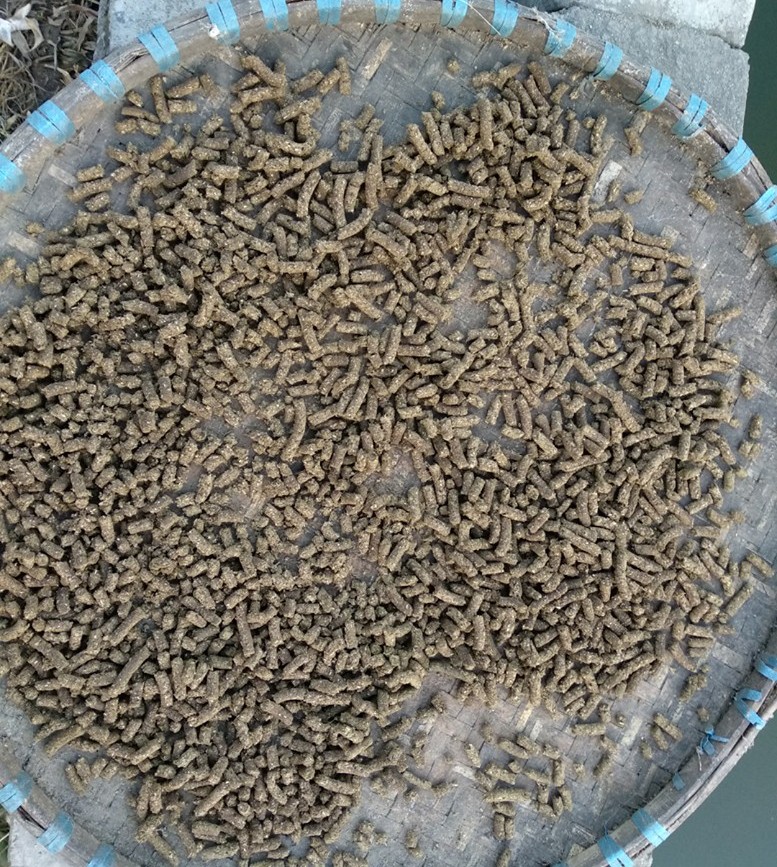
Kathmandu, April 2, 2025 — In a major step towards sustainable and cost-effective dairy farming in Nepal, Dr. Mohamad Husneid Azad, a veterinary doctor and researcher at the Nepal Agricultural Research Council (NARC), has successfully conducted the country’s first scientific trial on forage pellets. His pioneering research is now paving the way for widespread adoption of this innovative feed technology across Nepal’s dairy sector.
Forage pellets — made from dried forages such as grasses and alfalfa — are compressed into compact, easy-to-transport pieces. They are gaining popularity due to their nutritional efficiency and convenience in feeding ruminants like cows, buffalo, goats, and sheep. Dr. Azad’s study focused on Stylo, a type of legume forage, and revealed that these pellets can replace up to 20–40% of commercial dairy feed without compromising milk yield or quality.


The research, titled “Development of Forage Pellet Feeding Technology for Dairy Animals”, was published in the Nepalese Journal of Agricultural Sciences in 2019. Conducted over a 40-day period at NARC’s Animal Breeding Division in Khumaltar, Kathmandu, the trial showed promising results. Although statistical analysis indicated a non-significant difference (P > 0.05) in milk production and composition across diet groups, farmers observed a consistent increase in daily milk yield, with averages ranging from 4.58 to 7.29 liters over the trial period.
The trial also recorded milk quality metrics including fat content, SNF (Solids-Not-Fat), lactose, protein, and density levels. The findings showed stable and favorable milk compositions, suggesting that forage pellets do not negatively impact milk quality.
In addition to enhancing nutrition, forage pellets offer economic relief. “Replacing a portion of costly concentrate feed with legume-based pellets not only benefits animal health but also reduces feeding costs for farmers,” said Dr. Azad.
Since the trial, several forage pellet factories have emerged in Nepal, particularly in the Terai regions and other dairy-rich pockets. Farmers across the country are increasingly embracing this feeding method, reporting increased milk yields and improved animal health.
The National Animal Nutrition Research Center has taken cues from Dr. Azad’s work and is now expanding trials with different forage types to optimize feed formulations.
While the initial results are encouraging, Dr. Azad emphasizes the need for further studies to determine the optimal inclusion levels of forage pellets in various animal diets. Nevertheless, his research has laid a strong foundation for more sustainable and efficient livestock farming practices in Nepal.